

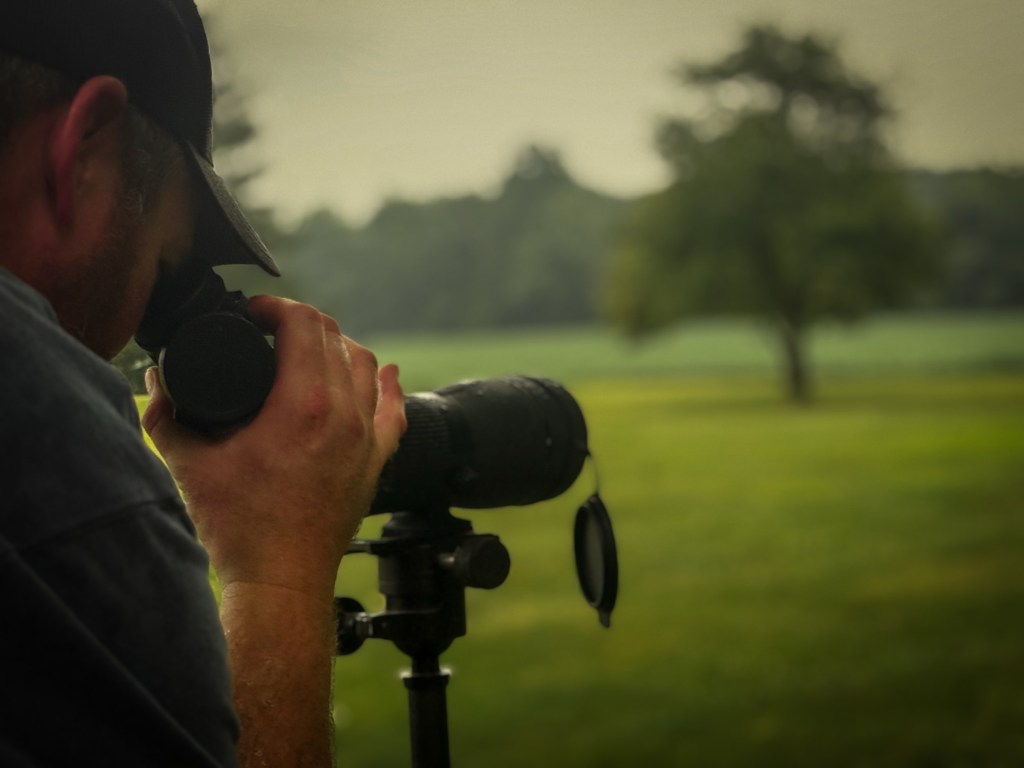
There is always a point toward the end of summer when something just feels different in the deer woods. It might still be 80 degrees in the afternoon, the mosquitoes might still be bad enough to carry you away, and most of the timber is still as green as it was in July, but you can tell fall is starting to work its way in.
For me, it normally starts on the drive to work. I will notice a soybean field beginning to get a yellow tint around the edges or see the first few leaves changing on a maple along the road. Then one morning it will be cool enough that I roll the windows down instead of immediately reaching for the air conditioning. About that same time, the trail camera pictures start looking different too.
That is when I know we are getting close.
Late August and early September are probably some of the most overlooked weeks in the whitetail calendar. Everybody gets excited about October, and for good reason, but a lot of what happens once hunting season gets here starts taking shape right now. Bucks are shedding their velvet, summer bachelor groups are beginning to change, food sources are shifting almost daily, and deer that have been fairly predictable for the last couple months are getting ready to throw us a curveball.
I have learned over the years that this is not the time to sit back and assume the deer I watched all summer are going to keep doing the same thing. September is when I start paying closer attention.
Velvet Is Coming Off and Patterns Are Changing
One of the first big changes is velvet shedding. There is something about getting that first trail camera picture of a hard-horned buck that makes deer season suddenly feel real. Just a week earlier that same buck might have been standing in a bean field with three or four other bucks, all of them still carrying velvet and feeding together like they did not have a worry in the world.
Then the velvet comes off and things start changing.
I used to get pretty frustrated when a buck I watched all summer disappeared around this time. I would have cameras full of him in July and August and think I had him pretty well figured out. He would use the same trail, enter the same field, and sometimes show up within minutes of the same time several evenings in a row.
Then September would roll around and he would be gone.
For a long time, I thought I had done something wrong. Maybe I checked the camera too often. Maybe somebody bumped him or maybe he moved completely off the property. Sometimes those things probably happened, but eventually I figured out that a lot of bucks simply start changing their range once summer winds down.
The bachelor groups begin breaking apart, their priorities change, and places that did not mean much to them in July start becoming more important. A buck that spent all summer around an open soybean field might start spending more time in the timber. Old travel corridors begin getting used again. Creek crossings, oak ridges, thick edges and places close to fall bedding cover start becoming worth watching.
That is why I look at summer trail camera information for what it is. It tells me a buck is around and gives me a good look at what survived another year, but I do not marry myself to those summer patterns. Right now, I am trying to figure out where those bucks are going instead of worrying about where they have been.
Now Is the Time to Find the Good Acorn Trees
A big part of figuring out that next move is food.
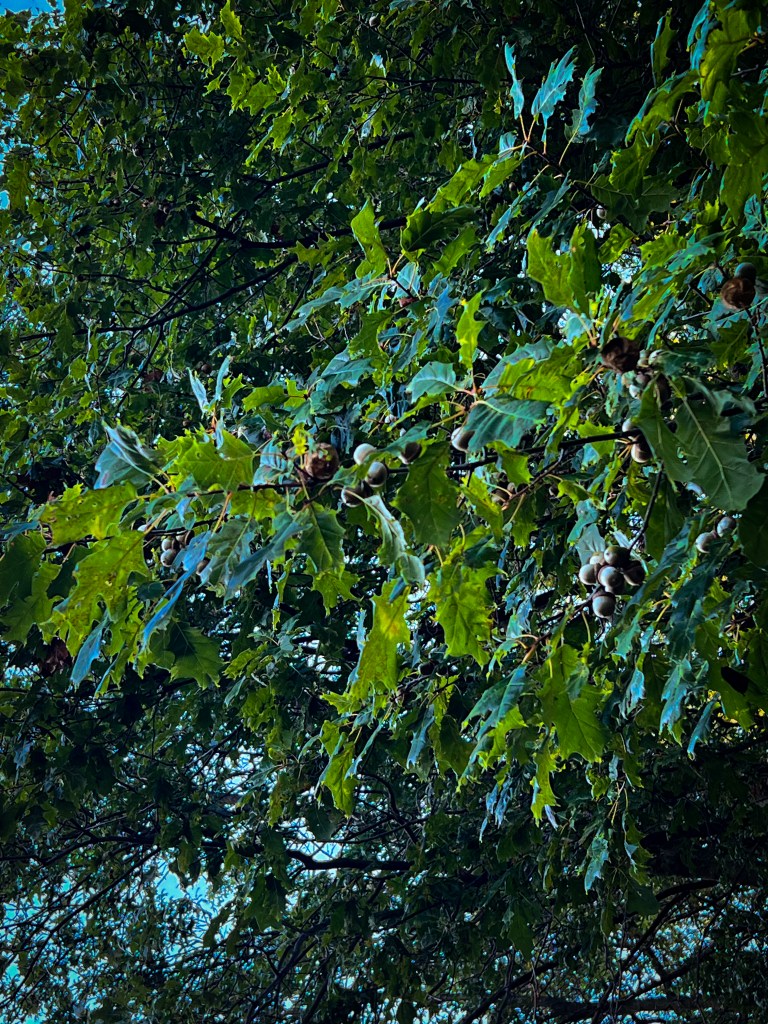
This is the time of year when I start paying serious attention to oak trees. If you have hunted whitetails around timber very long, you already know what a good acorn crop can do. You can have deer pouring into a bean field every evening and think you have the whole farm figured out. Then the right white oak starts dropping and suddenly that field gets awfully quiet.
Acorns can change a deer pattern almost overnight.
The mistake I think a lot of hunters make is looking at an entire oak ridge and assuming it is all equally good. It is not. I have walked ridges where one tree is absolutely loaded and another one 30 yards away has hardly anything on it. The deer usually figure out the good trees before we do.
That is why now is the time to find them.
I like getting out and checking oak trees before hunting season gets here, but I am careful about how I do it. There is no reason to walk right through a buck’s bedroom just to see whether an oak has acorns. I will scout along field edges, old logging roads and places I can reach without tearing up the woods. I am looking up into the branches, checking the ground and making a mental note of the trees that are loaded.
The really good ones are the trees sitting close to security cover.
If a buck can get out of his bed and walk 75 or 100 yards to a loaded white oak without stepping into the open, that tree gets my attention. Mature bucks do not get old by making things difficult on themselves. If they can feed close to cover instead of walking into the middle of a field in daylight, that is often exactly what they are going to do.
Green Soybeans Can Be Gold
Soybeans are the other food source I am watching closely right now, but September changes how I look at them.
All summer long, a green soybean field is a green soybean field. Once late August and September arrive, that starts changing fast. Some beans begin yellowing and drying down while other fields, usually because they were planted later, are still lush and green.
Those are the fields I want to find.
Around here in northwest Ohio, you can see a huge difference from field to field. You might drive past three soybean fields that are already starting to turn and then come around a corner and find one that still looks like it did in July. I make a mental note every time I see one.
As more fields begin drying down, those few remaining green soybean fields become increasingly attractive. It is no different than anything else with whitetails. When something good becomes scarce, it becomes more valuable.
But finding a green bean field does not mean I immediately hang a stand on the edge and start planning opening night. I have ruined enough good spots in my life by getting too excited to know better. I want to know how deer are using it first.
Where are they coming from? Which corner are the bucks entering? Is there a drainage ditch or brushy fence row they are following? Where is the closest bedding cover? More importantly, can I actually hunt that field without every deer out there knowing I came and went?
Sometimes the best scouting is from a distance. I would rather sit back with binoculars or a spotting scope for two or three evenings and watch a field than walk in there and educate the buck I am trying to hunt before the season even opens.
Bucks Are Starting to Explore New Ground
September is also when I start expecting bucks to stretch their legs a little more. I would not call it rut behavior yet, but something definitely changes once velvet starts coming off. Testosterone is climbing, bachelor groups are beginning to separate, and bucks start using places they ignored for most of the summer.
A buck that spent July and August between one bedding area and one soybean field might suddenly start showing up along an oak ridge, creek crossing or old scrape line. Sometimes those movements are short. Sometimes it seems like a buck completely changes his home range.
That unpredictability can be frustrating, but it can also work in your favor.
This is when I start paying more attention to those places that historically get better as fall gets closer. Old travel corridors, community scrape locations, narrow funnels, thick transitions and timber close to bedding all become more important.
Cool September evenings are worth watching too.
Give me an evening when the temperature drops 10 or 15 degrees after a stretch of warm weather and I am interested. Those cooler nights seem to get deer on their feet earlier, and sometimes that is when a buck shows his hand and gives you the first clue about how he plans to use a property in the fall.
Do Not Love a Spot to Death Before the Season Opens
September has become a time when I try to be more patient, not less. There is always that temptation as deer season gets closer to start doing more. Check another camera. Walk another ridge. Move another stand. Go see if that buck is still bedding where you think he is.
Sometimes the best thing you can do is leave things alone.
I want enough information to make a good decision when the season opens, but I do not need to know where a buck is every hour of every day. If I have a mature buck using an area and the conditions are lining up, I would much rather keep him comfortable than have another hundred pictures of him. I have learned that deer season is a lot easier when the deer do not know you are hunting them yet.
That sounds simple, but it is easy to forget when opening day is getting close and you are itching to get into the woods.
Shoot Your Bow Every Chance You Get
While all these changes are happening in the deer woods, there is one thing I can work on every day without putting an ounce of pressure on a buck, and that is shooting my bow.
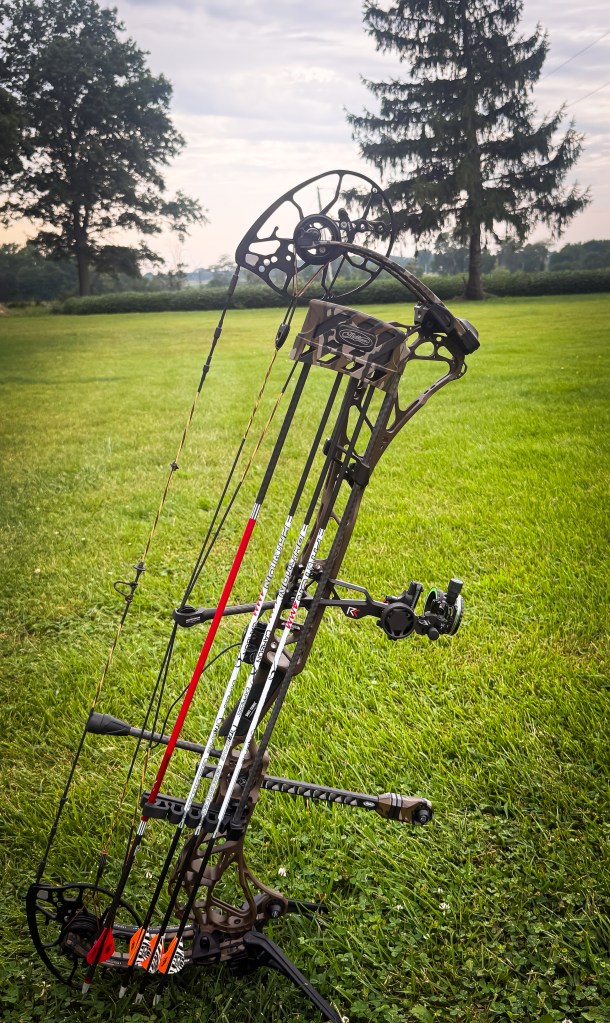
This year I am shooting the Mathews ARC 34, and at this point I want that bow in my hands as often as I can get it there.
I do not think preseason practice needs to mean standing in the backyard and hammering 50 or 100 arrows every night. In fact, I think there comes a point where that can hurt more than it helps. When I get tired, my form gets sloppy, and there is not much benefit in practicing bad habits. I would rather shoot a handful of good arrows.
Sometimes I will walk outside with the ARC 34 and shoot one arrow before doing anything else. No warm-up. No three-arrow group beforehand. Just one shot.
That first arrow tells me more than almost anything else I can do.
When a buck walks through my shooting lane this fall, I am not going to get five practice shots before the one that matters. I might have been sitting in a tree for three hours. My muscles might be cold. My heart is probably going to be beating a little faster than it was when I was shooting in the backyard.
That first arrow has to count.
I also start changing how I practice as the season gets closer. I will shoot sitting down. I will shoot from an elevated position and from my saddle. I will move around to different distances instead of standing on the same mark every evening. If I normally shoot at 20, 30 and 40 yards, I might move the target to 23 or 27.
Deer have a funny way of not standing at the nice even distances painted on a range.
More than anything, I want shooting that Mathews to become something I do without thinking about it.
Draw. Find my anchor. Settle the pin. Make the shot.
When a good buck is standing there, I already know my brain is going to be working overtime. I do not want part of that thought process to be wondering whether my anchor feels right or whether I have practiced enough.
That work happens now.
The Season Is Closer Than It Feels
Maybe that is why I enjoy this time of year so much. There is anticipation in everything. Every cool morning feels a little more like deer season. Every new hard-horned buck that shows up on a camera gets your attention. Every loaded oak tree makes you start thinking about a stand location. Every green soybean field you drive past makes you wonder what might step into it before dark.
Nothing in the whitetail woods is standing still right now. The bucks are changing. The food is changing. Their ranges are changing, and before long the pressure from hunters will start changing things again.
My job is just to keep up with it without getting in the way.
Find the good acorns. Keep track of the green beans. Pay attention when bucks start leaving their summer ranges. Keep the pressure low and resist the urge to know everything before opening day. And whenever you have a few spare minutes, grab your bow and shoot a couple arrows.
Because we have spent all summer saying deer season will be here before we know it.
Well, here we are.
In a few short weeks, all the trail camera pictures, summer scouting, conversations around the fire and evenings spent shooting in the backyard are going to come down to one moment.
When it does, you want to be ready.


Leave a Reply